
challenges faced by flex PCB manufacturers
Printed circuit boards are the heart of many electronic devices, allowing them to perform the necessary functions. They contain a number of components, including wires that provide the electrical connection to external sensors and actuators. While traditional rigid PCBs are effective for most applications, flexible printed circuit boards (FPCBs) have become increasingly popular due to their versatility and flexibility. However, this new technology has presented unique challenges that require innovative solutions.
FPCBs use flexible substrates, enabling them to conform to different shapes and sizes during assembly. This is especially important in wearables, which often take unconventional forms and need to be able to comfortably fit the human body or seamlessly integrate into clothing. To meet these demands, manufacturers must develop innovative materials, design techniques and manufacturing processes that allow them to create a range of flexible electronics.
flex pcb manufacturer can be made using a variety of materials, including copper and aluminum. They can also be populated with various types of components, including LEDs, microcontrollers and batteries. Advanced manufacturing technologies, such as laser direct structuring and roll-to-roll fabrication, can streamline the production process, making flex circuits more cost-effective and efficient. These innovations are helping to drive the wearables revolution and offer consumers more convenient, durable and user-friendly electronics.
Although flex circuits are much more versatile than their rigid counterparts, they are still subject to the same mechanical stress. In order to protect the integrity of a flex circuit board, it is important that the manufacturer employs rigorous testing and verification processes throughout production. These tests will ensure that the final product meets all of its specifications and performance requirements.
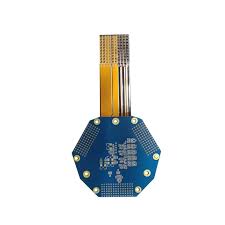
What are the challenges faced by flex PCB manufacturers?
During the assembly process, the flexibility of a flex circuit board can pose significant challenges. While rigid-flex PCBs can be assembled in a conveyor belt process that is ideal for mass-production, the assembly of a flexible circuit requires special attention and consideration. This includes ensuring that the board’s rigid and flexible sections are properly aligned, minimizing thermal expansion misalignment, maintaining signal integrity and controlling electromagnetic interference (EMI) between the rigid and flexible sections, and optimizing connector placement to ensure durability and reliability.
A flex PCB is more likely to be damaged by physical force than a rigid PCB, so it is important to avoid excessive bending. To reduce the risk of damage, it is important to select the proper materials for both the rigid and flex sections. In addition, the design process should include detailed routing and component placement strategies that can accommodate a 90-degree bend without compromising performance.
While flexible PCBs are more resilient than their rigid counterparts, they can still be damaged by power surges, lightning strikes or contamination from metallic dust. It is also important to ensure that the flex circuits are properly protected during storage and shipping.
Rigid-flex and flex circuits are becoming more common in consumer electronics. In fact, the majority of wearables currently on the market utilize a combination of rigid-flex and flex circuits. As the demand for these new products continues to grow, the flex PCB manufacturer must overcome numerous challenges in order to deliver high-quality, reliable circuits.